Covid-19 Emergency Living Fund set up to help people in financial hardship
The county council has extended its existing Welfare Support Scheme to create a new Emergency Living Fund to help people who are in financial hardship because of the coronavirus.
The council has also increased the funding that is available to support people through the Covid-19 pandemic by almost 40 percent. It has also changed the criteria so more people will be able to apply.
The Welfare Support Scheme already provides practical support to those in financial hardship for things like food deliveries, rent, gas and electricity top-ups, and essential household items such as furniture and white goods.
The new fund will offer more help, and now covers the replacement of white goods that have broken down, supermarket vouchers and cash when necessary.
You can apply for help if:
You are a Gloucestershire resident over the age of 16 and you are classed as being in a vulnerable group, for example, you have a history of mental illness or you need support to avoid uncontrollable debt; and
You are either on a low income or receive benefits; or you are on a low income or are unemployed and you are waiting for a benefit claim.
Cllr Mark Hawthorne, leader of Gloucestershire County Council, said: “In times of crisis, it is often the most disadvantaged people who are worst affected. We are putting in place an additional safety net for our most vulnerable residents who have been affected by Covid-19 to support them through this difficult time.”
The Covid-19 Emergency Living Fund launched on Monday 4 May and applications for help will be reviewed within 24 hours, with people who are approved for support getting the help they need another 24 hours after that.
In addition to this, another specialist support scheme for vulnerable children and families has also been extended. Previously only social workers could refer children and families for support but this has also been changed so now any professional can refer them for help.
For more information on who can receive support and how to apply or refer someone.
How do we get out of lockdown – update
I wrote on the 6th April a piece about how we can get out of “lockdown” and move forward, and speculated what life would be like for the rest of the year. At the time I thought it contentious and was expecting lots of comments…and indeed asked for some…..I received not one.
Since then, we have definitely seen the peak of cases and the Government, like others around the world are now stating a conversation proposing many of the same measures I wrote about. The Government is also hinting about re-opening businesses…and it fact is already doing so
I would urge great caution…
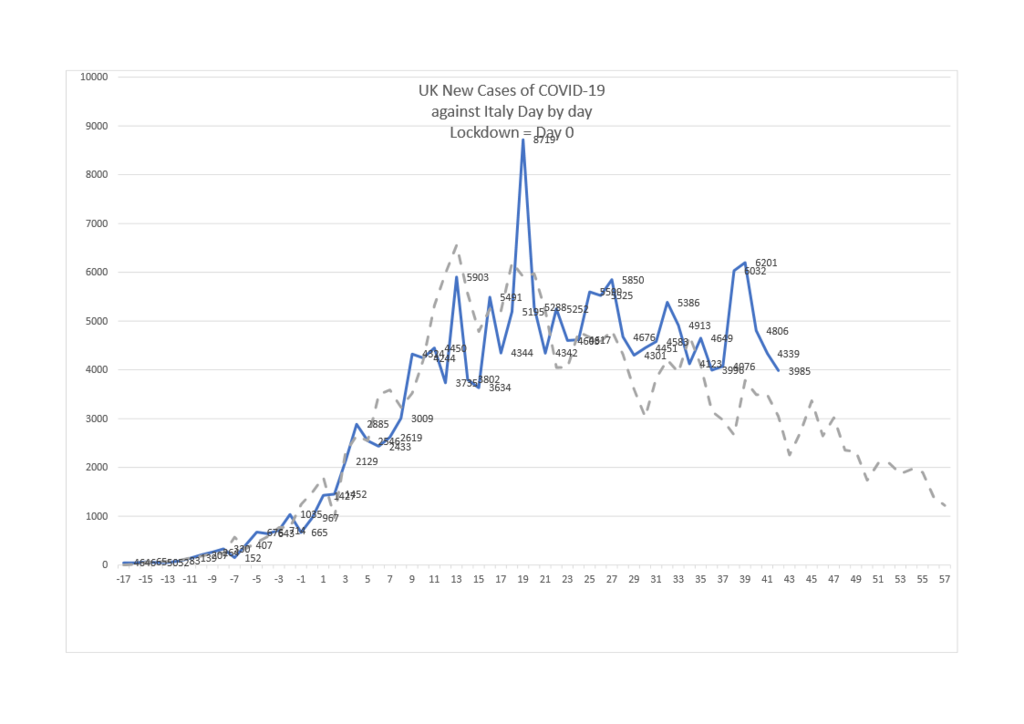
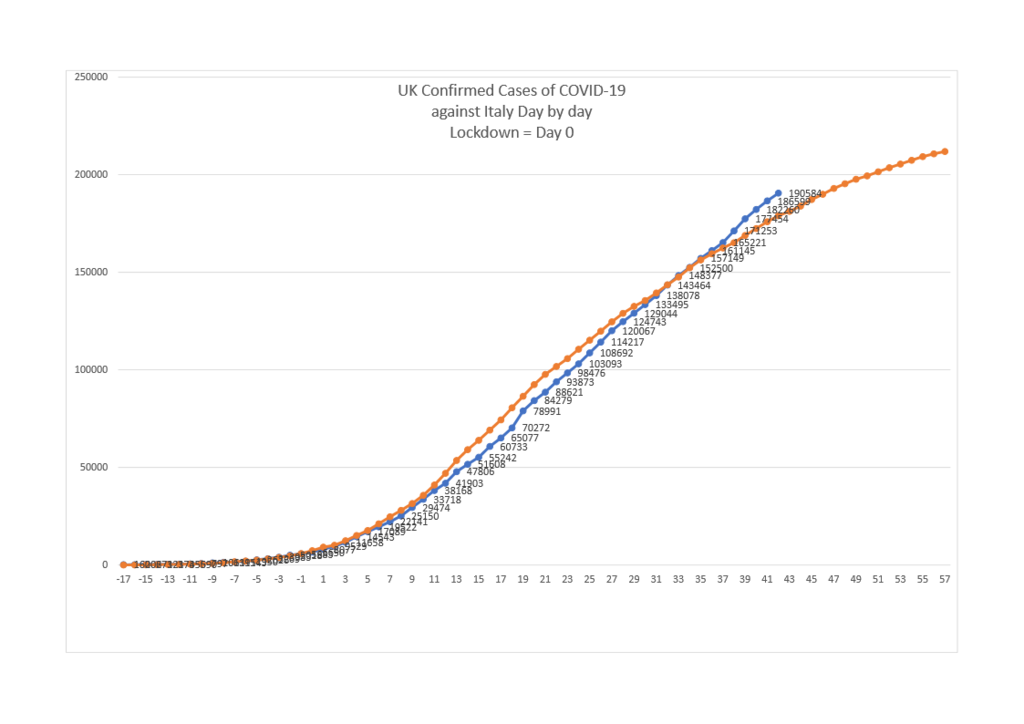
It has become clear over time just how bad our leaders have planned for this pandemic, and made many mistakes and the greatest mistake might be in opening up the country too early. To illustrate my case, please see the graphs below where I have superimposed the UK against Italy but used as the starting point for both countries LockDown day which Italy entered into some 2 weeks before the UK.
The curve of the Pandemic in the UK (the blue line) is almost identical to that of Italy, but where as the number of new cases in Italy has steadily dropped, the rate of new cases in the UK has not yet dropped back at all and stubbornly remains around 4000 per day. It’s a much slower decline, possibly because the Lockdown in Italy was much much stricter.
To put it another way, at the start of lockdown the UK (in Blue) had fewer cases than Italy, but around a week ago the lines crossed over and now we have more cases than Italy and we can still expect many many more cases.
Whatever, If any politician reads or learns from History, perhaps they should read the following article about the 1918 pandemic and what happened when preventative measures were lifted too soon.
That is just one of many articles you can find by googling “Double Curve Pandemic”. What does worry me, is that our government will decide that an acceptable rate of infection for the UK, is around 4,000 new cases per day and lift the restrictions too soon………………….
COVID Symptom Tracker
Symptomatic COVID cases fall by 71% over 2 weeks
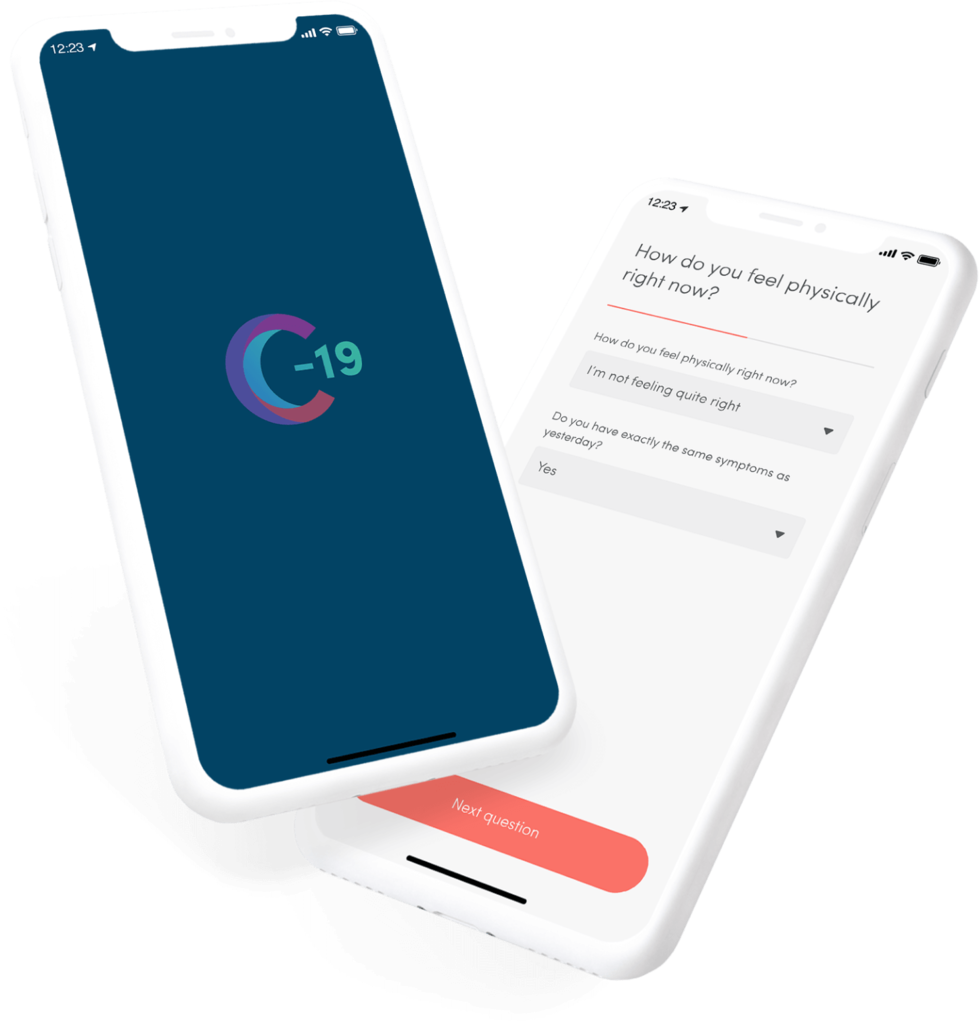
The number of cases of predicted symptomatic COVID has fallen from 2 million to 582,640 in just over two weeks (01 April to 15 April) according to the latest data from the new COVID Symptom Tracker app.
Take 1 minute to report your health daily, even if you’re well.
Help slow the outbreak
Join millions of people helping to fight COVID-19
Help scientists identify high risk areas in the UK
Face Mask or Not? It’s a question we all want answered? I noticed today people shopping with them. The answer is ambiguous at present. The WHO (World Health Organisation) say NO, the CDC (Centre for Communicable Diseases) say YES…The British Government say NO, The EU is slowly shifting to YES…with the Czech Republic, Slovakia, Austria and Bulgaria already imposing the wearing of.
We have all seen and heard them all…but are they true….
Exposing yourself to the sun or to temperatures higher than 25C degrees DOES NOT prevent the coronavirus disease (COVID-19)
You can catch COVID-19, no matter how sunny or hot the weather is. Countries with hot weather have reported cases of COVID-19. To protect yourself, make sure you clean your hands frequently and thoroughly and avoid touching your eyes, mouth, and nose.
You can recover from the coronavirus disease (COVID-19). Catching the new coronavirus DOES NOT mean you will have it for life.
Most of the people who catch COVID-19 can recover and eliminate the virus from their bodies. If you catch the disease, make sure you treat your symptoms. If you have cough, fever, and difficulty breathing, seek medical care early – but call your health facility by telephone first. Most patients recover thanks to supportive care.
Being able to hold your breath for 10 seconds or more without coughing or feeling discomfort DOES NOT mean you are free from the coronavirus disease (COVID-19) or any other lung disease.
The most common symptoms of COVID-19 are dry cough, tiredness and fever. Some people may develop more severe forms of the disease, such as pneumonia. The best way to confirm if you have the virus producing COVID-19 disease is with a laboratory test. You cannot confirm it with this breathing exercise, which can even be dangerous.
Drinking alcohol does not protect you against COVID-19 and can be dangerous
Frequent or excessive alcohol consumption can increase your risk of health problems.
COVID-19 virus can be transmitted in areas with hot and humid climates
From the evidence so far, the COVID-19 virus can be transmitted in ALL AREAS, including areas with hot and humid weather. Regardless of climate, adopt protective measures if you live in, or travel to an area reporting COVID-19. The best way to protect yourself against COVID-19 is by frequently cleaning your hands. By doing this you eliminate viruses that may be on your hands and avoid infection that could occur by then touching your eyes, mouth, and nose.
Cold weather and snow CANNOT kill the new coronavirus.
There is no reason to believe that cold weather can kill the new coronavirus or other diseases. The normal human body temperature remains around 36.5°C to 37°C, regardless of the external temperature or weather. The most effective way to protect yourself against the new coronavirus is by frequently cleaning your hands with alcohol-based hand rub or washing them with soap and water.
Taking a hot bath does not prevent the new coronavirus disease
Taking a hot bath will not prevent you from catching COVID-19. Your normal body temperature remains around 36.5°C to 37°C, regardless of the temperature of your bath or shower. Actually, taking a hot bath with extremely hot water can be harmful, as it can burn you. The best way to protect yourself against COVID-19 is by frequently cleaning your hands. By doing this you eliminate viruses that may be on your hands and avoid infection that could occur by then touching your eyes, mouth, and nose.
The new coronavirus CANNOT be transmitted through mosquito bites.
To date there has been no information nor evidence to suggest that the new coronavirus could be transmitted by mosquitoes. The new coronavirus is a respiratory virus which spreads primarily through droplets generated when an infected person coughs or sneezes, or through droplets of saliva or discharge from the nose. To protect yourself, clean your hands frequently with an alcohol-based hand rub or wash them with soap and water. Also, avoid close contact with anyone who is coughing and sneezing.
Are hand dryers effective in killing the new coronavirus?
No. Hand dryers are not effective in killing the 2019-nCoV. To protect yourself against the new coronavirus, you should frequently clean your hands with an alcohol-based hand rub or wash them with soap and water. Once your hands are cleaned, you should dry them thoroughly by using paper towels or a warm air dryer.
Can an ultraviolet disinfection lamp kill the new coronavirus?
UV lamps should not be used to sterilize hands or other areas of skin as UV radiation can cause skin irritation.
How effective are thermal scanners in detecting people infected with the new coronavirus?
Thermal scanners are effective in detecting people who have developed a fever (i.e. have a higher than normal body temperature) because of infection with the new coronavirus.
However, they cannot detect people who are infected but are not yet sick with fever. This is because it takes between 2 and 10 days before people who are infected become sick and develop a fever.
Can spraying alcohol or chlorine all over your body kill the new coronavirus?
No. Spraying alcohol or chlorine all over your body will not kill viruses that have already entered your body. Spraying such substances can be harmful to clothes or mucous membranes (i.e. eyes, mouth). Be aware that both alcohol and chlorine can be useful to disinfect surfaces, but they need to be used under appropriate recommendations.
Do vaccines against pneumonia protect you against the new coronavirus?
No. Vaccines against pneumonia, such as pneumococcal vaccine and Haemophilus influenza type B (Hib) vaccine, do not provide protection against the new coronavirus.
The virus is so new and different that it needs its own vaccine. Researchers are trying to develop a vaccine against 2019-nCoV, and WHO is supporting their efforts.
Although these vaccines are not effective against 2019-nCoV, vaccination against respiratory illnesses is highly recommended to protect your health.
Can regularly rinsing your nose with saline help prevent infection with the new coronavirus?
No. There is no evidence that regularly rinsing the nose with saline has protected people from infection with the new coronavirus.
There is some limited evidence that regularly rinsing nose with saline can help people recover more quickly from the common cold. However, regularly rinsing the nose has not been shown to prevent respiratory infections.
Can eating garlic help prevent infection with the new coronavirus?
Garlic is a healthy food that may have some antimicrobial properties. However, there is no evidence from the current outbreak that eating garlic has protected people from the new coronavirus.
Does the new coronavirus affect older people, or are younger people also susceptible?
People of all ages can be infected by the new coronavirus (2019-nCoV). Older people, and people with pre-existing medical conditions (such as asthma, diabetes, heart disease) appear to be more vulnerable to becoming severely ill with the virus.
WHO advises people of all ages to take steps to protect themselves from the virus, for example by following good hand hygiene and good respiratory hygiene.
Are antibiotics effective in preventing and treating the new coronavirus?
No, antibiotics do not work against viruses, only bacteria.
The new coronavirus (2019-nCoV) is a virus and, therefore, antibiotics should not be used as a means of prevention or treatment.
However, if you are hospitalized for the 2019-nCoV, you may receive antibiotics because bacterial co-infection is possible.
Are there any specific medicines to prevent or treat the new coronavirus?
To date, there is no specific medicine recommended to prevent or treat the new coronavirus (2019-nCoV).
However, those infected with the virus should receive appropriate care to relieve and treat symptoms, and those with severe illness should receive optimized supportive care. Some specific treatments are under investigation, and will be tested through clinical trials. WHO is helping to accelerate research and development efforts with a range or partners.
The government is aiming to carry out 100,000 coronavirus tests a day in England by the end of April, Health Secretary Matt Hancock said, as he announced a “five-pillar” testing plan. It comes as the government was criticised for not increasing the number of tests more quickly. Currently, there are around 10,000 tests being carried out a day.
The new target includes swab tests, which are already in use, and blood tests, which are yet to be launched. It was originally thought the target would be for the whole of the UK, but the government later issued a correction saying the goal will only be for England.
Speaking at the end of his seven days of quarantine after testing positive for the virus, Mr Hancock said 100,000 tests “is the goal and I’m determined we’ll get there”.
SO…..Followthis linkthrough the month and see if he keeps his word!
However, the only country reputed to be doing 100,000 tests per day is USA, Italy is only doing 40,000 and South Korea is only doing about the same number as the UK, although it’s always help up as the shining example. So, 100,000 is probably a little bit of an exaggeration….or let’s say wishful thinking. I think a more realistic figure to aim for would be 50,000 and expect to get 40,000. – Richard
You may have received a letter from the NHS telling you that you’re clinically extremely vulnerable, or been contacted by your GP or hospital clinician. If this has not happened by Monday 30 March, contact your GP or clinician after you register with this service.
It may take time for any support offered through this service to arrive. Wherever possible you should continue to rely on friends, family and wider support to help you meet your needs.
You can register yourself, or on behalf of someone else.
What do we mean by extremely vulnerable?
People falling into this extremely vulnerable group include:
Solid organ transplant recipients.
People with specific cancers:
people with cancer who are undergoing active chemotherapy or radical radiotherapy for lung cancer
people with cancers of the blood or bone marrow such as leukaemia, lymphoma or myeloma who are at any stage of treatment
people having immunotherapy or other continuing antibody treatments for cancer
people having other targeted cancer treatments which can affect the immune system, such as protein kinase inhibitors or PARP inhibitors
people who have had bone marrow or stem cell transplants in the last 6 months, or who are still taking immunosuppression drugs
People with severe respiratory conditions including all cystic fibrosis, severe asthma and severe COPD.
People with rare diseases and inborn errors of metabolism that significantly increase the risk of infections (such as SCID, homozygous sickle cell).
People on immunosuppression therapies sufficient to significantly increase risk of infection.
Women who are pregnant with significant heart disease, congenital or acquired.